How to Improve Your Landscape Photography
Our goal as humans is to learn and become better at doing things such as our day job, at cooking at home or in our hobbies or passions. I often hear the same question: How can I be a better photographer? To me, the answer is quite simple. In fact, many points will make you a better photographer.
In this article, I will talk about the many points I can think of. Points that over the years have helped me to become the photographer I am today.
A BETTER CAMERA WILL HELP?
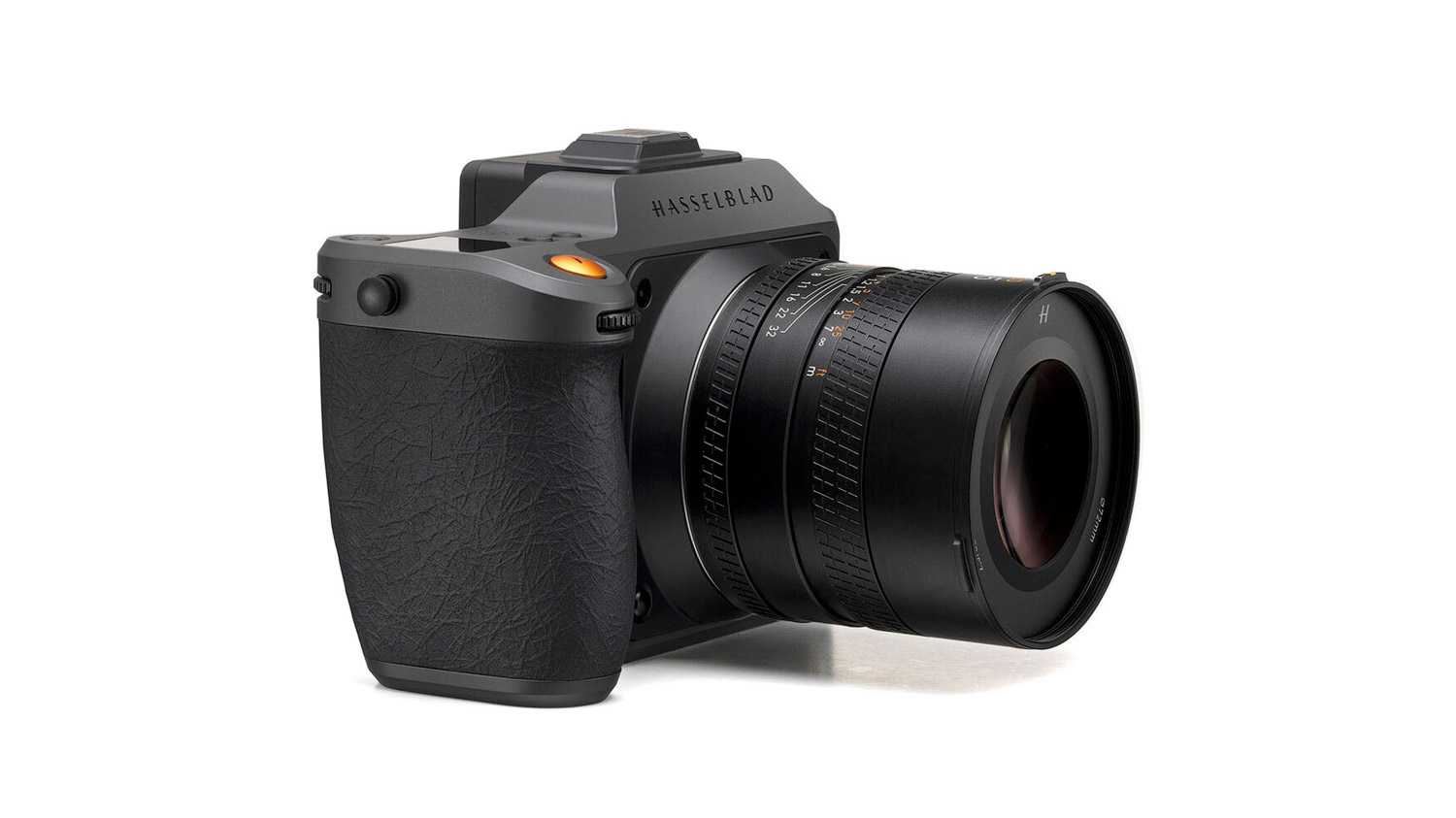
Will a better camera help you to become a better photographer? Short answer: no! Let me elaborate on that very important point. First of all, the camera does not take the images…the photographer does. The best camera in the world won’t make you a better photographer. Knowing how your current camera works will. You should learn how to master the piece of equipment you have in your hands before considering buying something else.
The camera I was using not so long ago was a Canon EOS 5DSr. That camera body was announced over 10 years ago and I received mine in June 2015. If you do the math correctly, I have been using that camera body for 10 years! Why wouldn’t I change it as newer versions came out? Because it was doing the job for me. Why would I spend money just to spend money? For landscape photography, I don’t need a fast autofocus or a lightning fast burst speed…I don’t even need high ISO performance because most of my images are captured on a tripod. If I was an event photographer, then all the newer techs that mirrorless cameras offer would have been extremely useful. The only reason why I switched to a newer camera body is because I want to photograph more night scenes and my Canon EOS 5DSr creates a mess of noise when the ISO is brought over ISO 800. If it wasn’t for that, I’d still be using that old camera.
PRACTICE MAKES PERFECT
You’ve heard the expression more than once in your life…practice makes perfect. That statement applies for basically everything in life. Your first omelette wasn’t your best one, your first day on the job wasn’t your best one either…the examples are endless. Practice does make perfect! A simple statement that means the world when you want to become good at something.
TRAIN OUR EYES
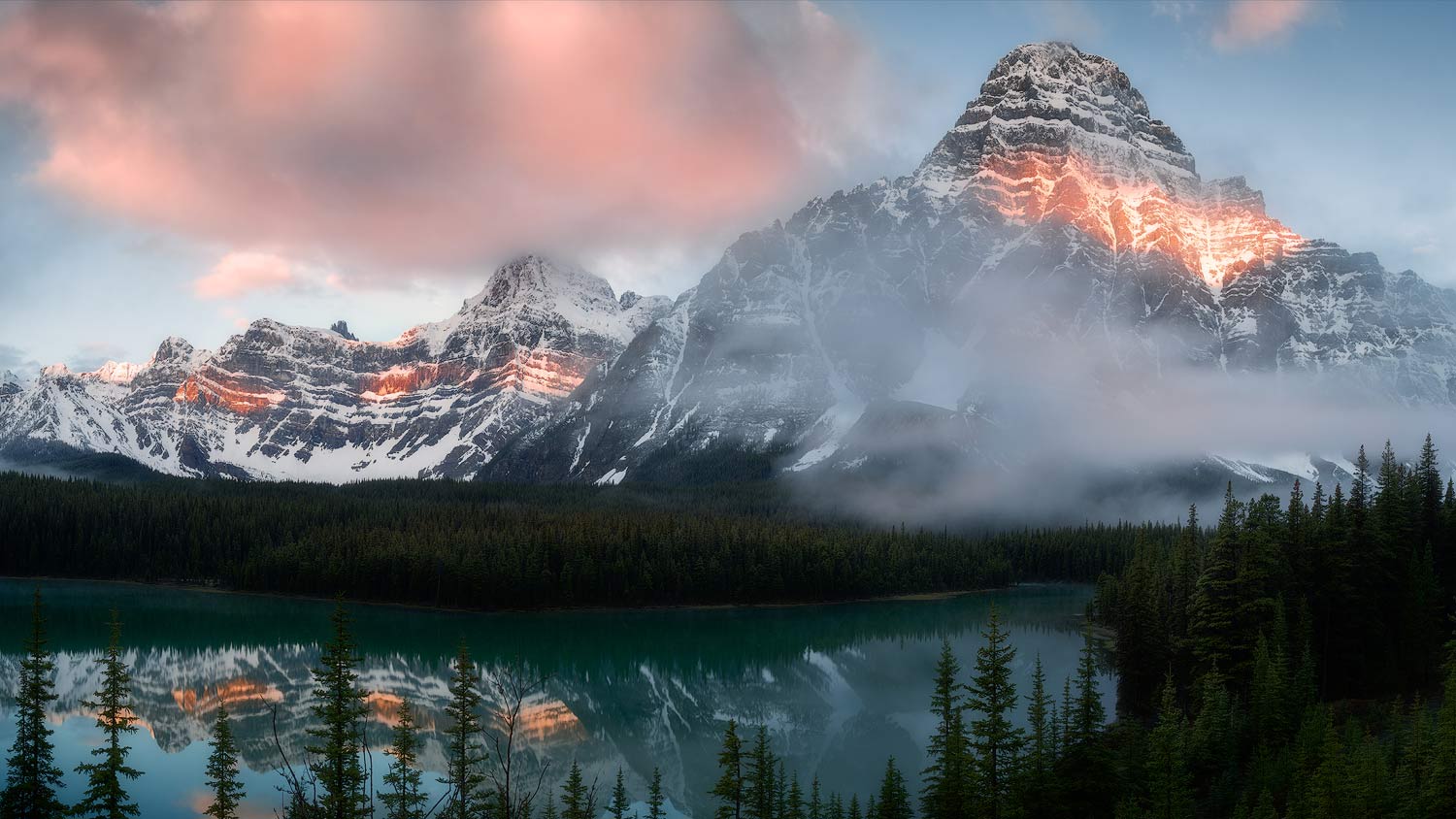
One of the most important things as a photographer is to train our eyes. How can we do that you may ask? Looking for inspiration on the internet is the perfect way to stimulate our brain and our eyes. By looking at different images, we will obviously have different feelings whether the image is lovely or not. It is important to understand what makes us have these feelings about what we are looking at. Why is the image beautiful? Is the composition interesting? Are the colors beautiful? Are the leading lines pulling you into the scene? Reading and understand the images will be a key factor in our learning curve as a photographer. And remember that I am not asking you to copy what you find on internet…we have to learn and as an artist, taking inspiration from others is an important exercise to do almost daily.
Years ago, I remember looking at images on 500PX…yes, 500PX, that platform was a thing even before Facebook and Instagram became big. I remember saving images in my favorites. And a couple of years or even months later, I had improved my photography in such a way that what I used to love didn’t talk to me anymore. I invite you to do the same if you are serious about improving your photography game. Make screenshots of images you like, hide them in a folder and look at them a year later. If you think the images are just looking meh when compared to yours, that probably means you’ve improved since.

KEEP EXPLORING
While photographing mother nature’s creations, it is important to constantly explore and look for different variations of the same compositions. Fine-tuning as I would call it since I come from a car mechanic background. Sometimes, lowering or raising the camera a few centimeters will make a world of difference. Since I create 99% of my work on a tripod, that represents a bit more tripod manipulation but in the end, I am always very pleased with the final result. And that theory does not only apply for landscape photography…any genre of photography will require fine-tuning. And that’s what will make an image stand out from the mass.
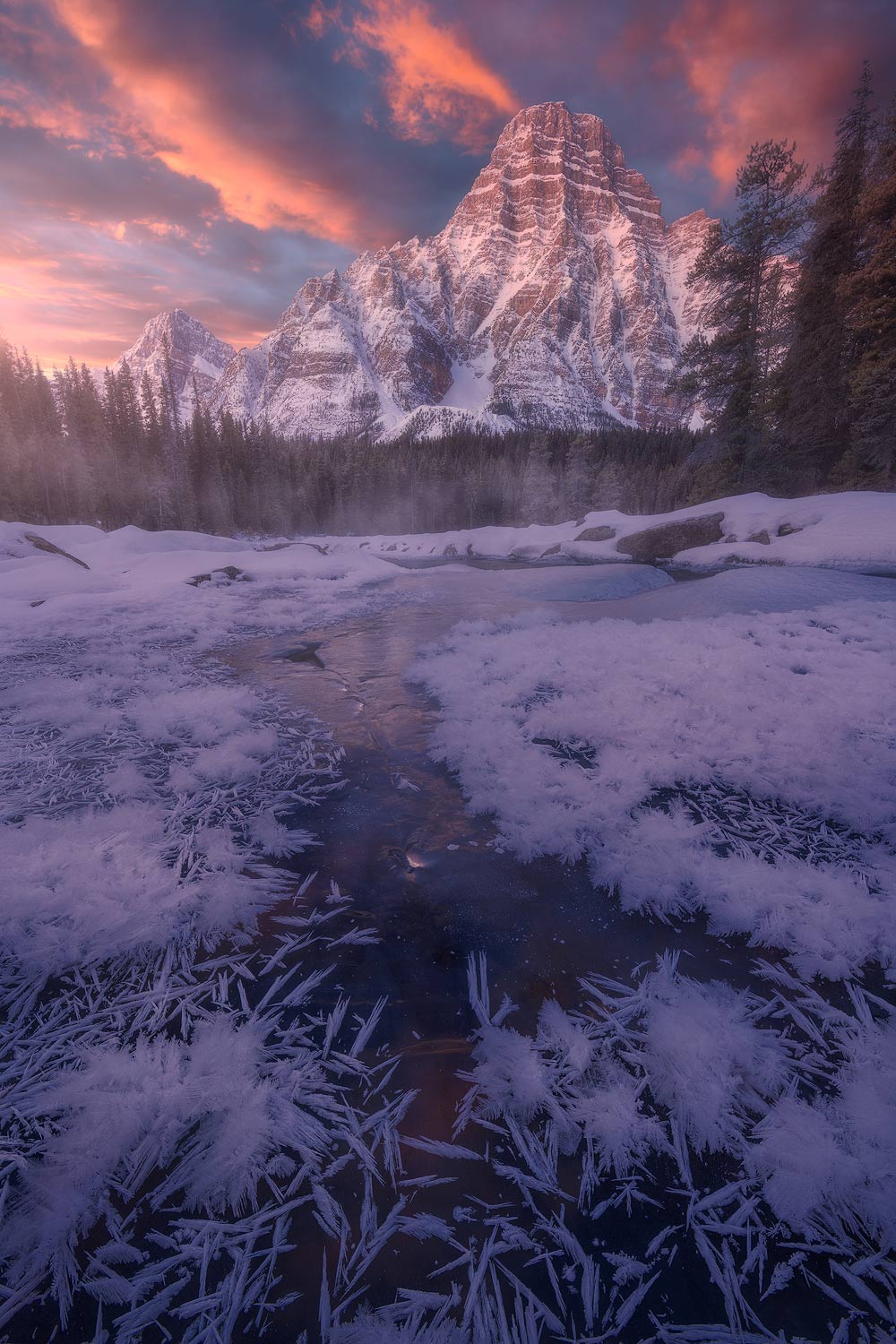
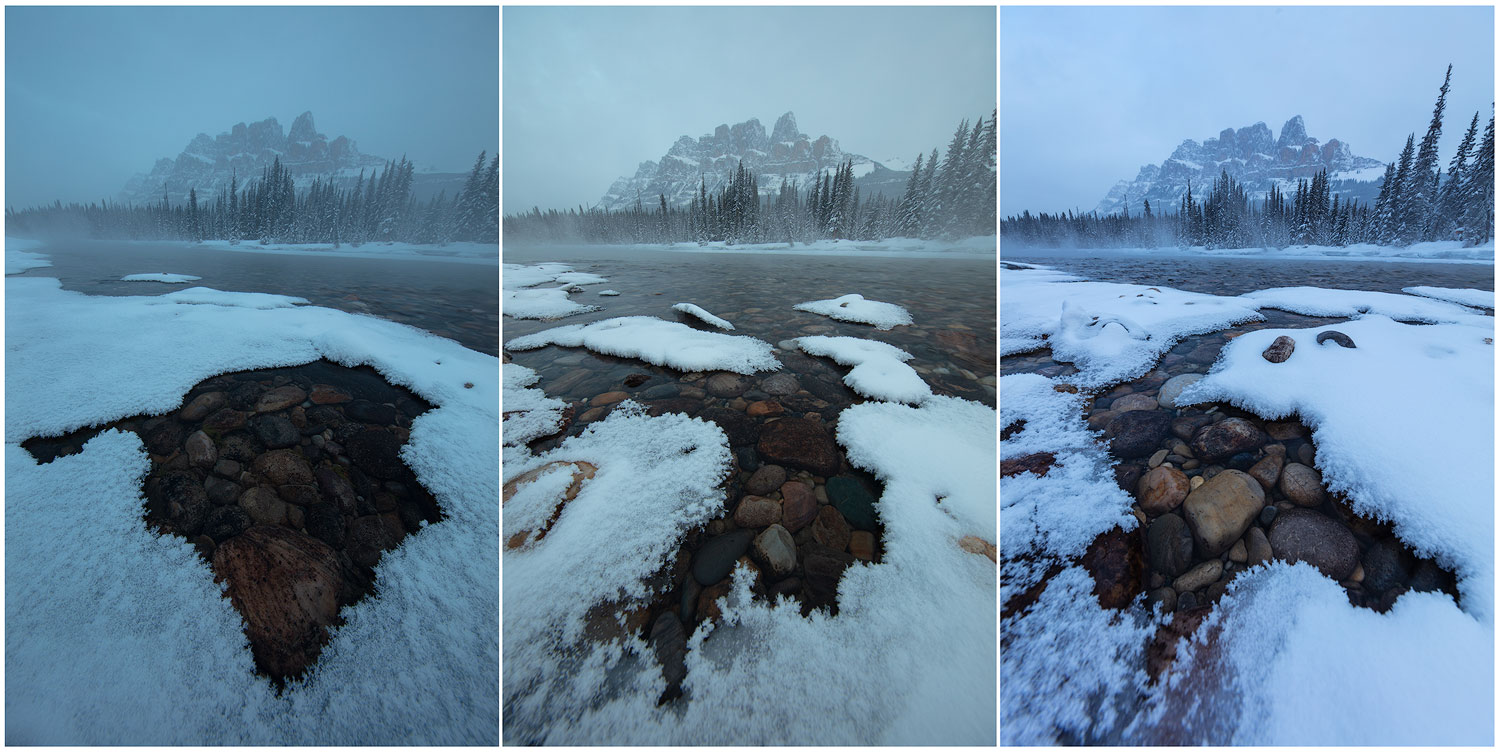
Once done with that initial composition, walk around and look for other cool features to use as a foreground. I remember back in January 2020 on a bone chilling winter morning at Castle Mountain, the conditions were quite interesting. The entire river bed was covered with fresh fluffy snow. I could find small areas of open water connected to the river. I stopped at one spot, settled my tripod and took a first image which I was so pleased with! I was even telling myself: That’s it, I got the shot! Then I started exploring more for different water bodies and created a few more. Guess what, the third and final one ended up being my favorite of them all!
VISITING THE SAME LOCATIONS
One thing as a landscape photographer, we will be visiting the same locations over and over again. Is that good or bad? Some people don’t like to play golf on the same golf course all the time. Same could be said about landscape photographers, we don’t always like to visit the same locations. But the reality of the situation is we can’t always travel to exotic destinations. In order to keep yourself active with the three previous points, continue visiting those locations that are closed to home. Try to see them with a different eye or a different perspective. The seasonal changes will make a big impact on many things such as vegetation, colors or general conditions of light.


FLIP THINGS AROUND
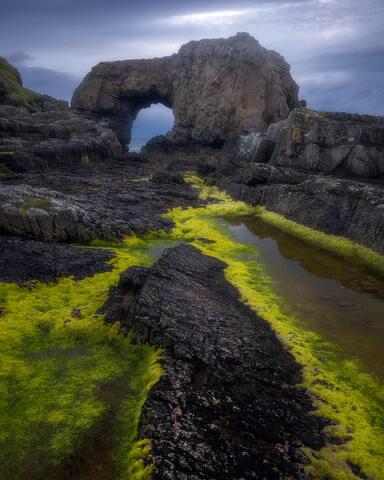
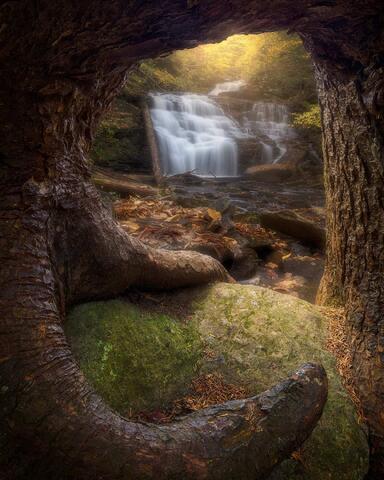
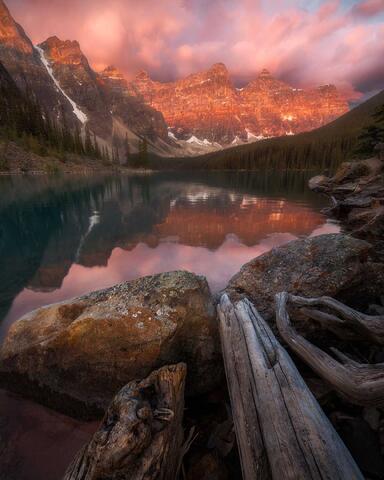
Flip things around or better said getting out of our comfort zone is another key factor to improve as an artist and more specifically as a landscape photographer. Let’s say you don’t like portrait oriented images and photograph all your landscape images in landscape orientation…do the exact opposite and shoot in portrait orientation if the scene permits it! I love portrait oriented landscape images. They often make for much simpler and easier to read compositions.
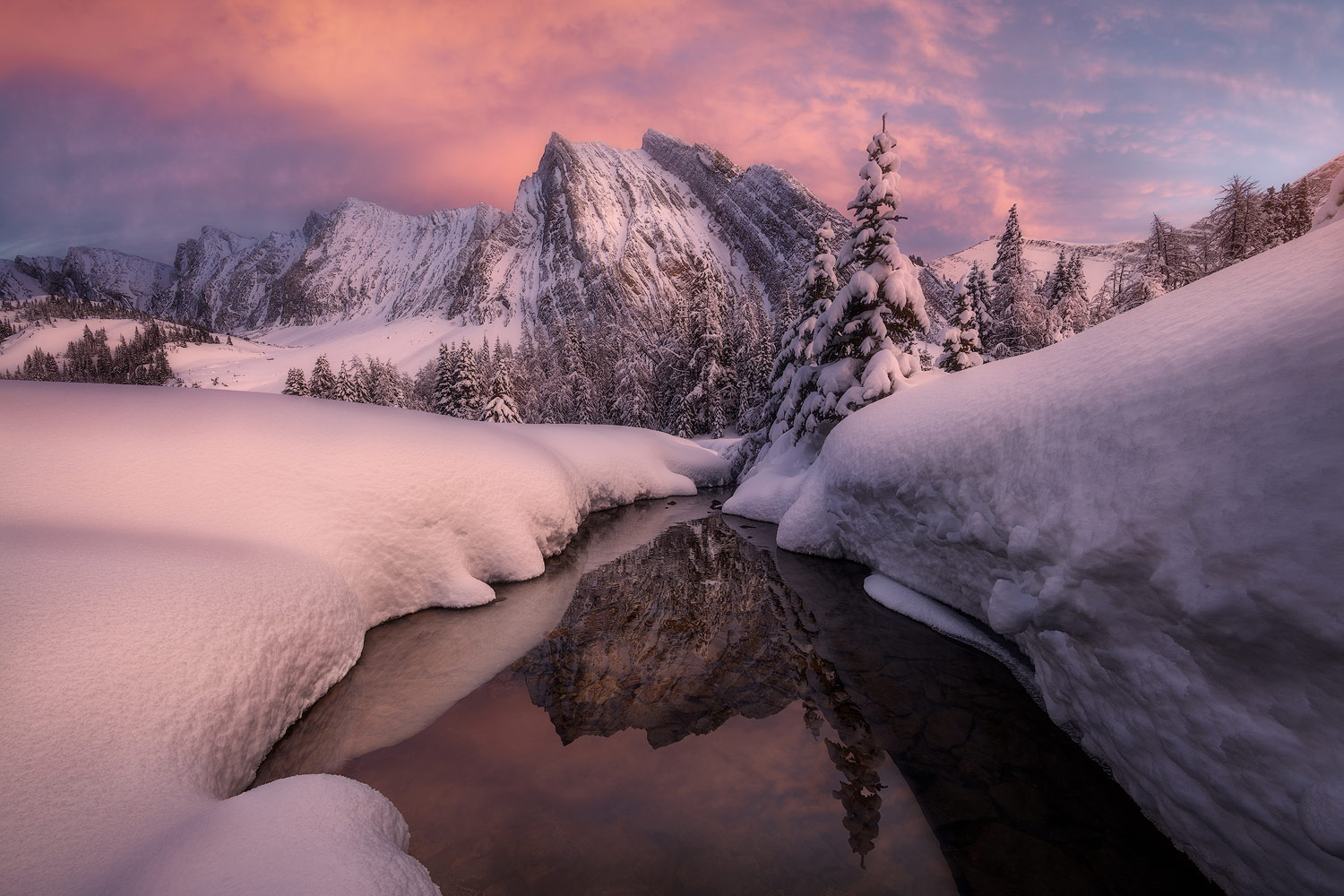

One thing I love to do is to limit myself to specific pieces of equipment. I tend to photograph most of my images with an ultra-wide angle lens. When I re-visit said location for the x amount of times, I will leave my comfort zone piece of equipment at home and I will bring a lens I never thought of using like a telephoto zoom lens. That will automatically force me to concentrate on intimate or texture shots which can be so beautiful. It’s pure fun to create something out of small parts of a grand scene. In fact, I once wrote an article that covered that topic. Please read INTIMATE PHOTOGRAPHY: LESS IS MORE if you want to learn more about it.
Another way to get yourself out of your comfort zone could be to use different settings or techniques such as intentional camera movement. These kinds of images often create some really lovely intimate or abstract images.
BETTER PREPARATION, MORE SUCCESS
Better preparation will always result in more successful images. Preparation could require a bit of time behind your computer at home…could involve going out a couple of times to scout some locations, or could also mean to use the power of technology with apps like PhotoPills to understand the light direction or position of the milky way. All I am saying is that landscape photography isn’t just about going out and shooting what we see…it involves a lot of preparation. On very rare occasions, I was able to succeed when I wasn’t well prepared. Most of the time, when I did not put in the effort, I ended up returning home with images that I was far from being happy with.
And in today’s technology era, we don’t have the excuse for not being well prepared. Let’s say you spend the big dollars to go to Iceland, I can’t imagine you going there unprepared. I know some destinations are almost giving images to you on a silver plate. But mark my words, preparation will make your images stand out from the mass. Find epic locations thanks to Google Earth, plan your shootings with a reliable weather app such as Windy, use PhotoPills to be aware of light direction for each location you plan to visit and know when is the best time to visit said location. Is this a sunrise or a sunset location? Do your homework properly and you will be happy you did. PhotoPills also has awesome tools like view angle calculators which could help plan which lens you’ll need too! That can come in handy if you don’t have a specific lens and need to rent one. I also do a lot of seascape photography…I use Nautide to be well aware of the tide situation and potentially avoid trapping myself somewhere at high tide.

…IN CONCLUSION
In conclusion, that sums up a few of the most important points to becoming a better landscape photographer in general. Yes, no matter what, you will fail and make mistakes. Trying to make sense of everything at once is near impossible unless you are a rare phenomenon or a super hero. What’s truly important is a fail isn’t really a fail if you don’t repeat it…it was an opportunity to learn and become better!