Finding Great Leading Lines for your Images
I am often told that landscape photography is easy…I am also being told that all we, landscape photographers, have to do is go outside and photograph what ever is in front of us. Now I don’t want to start a debate about which form of photography is easier or more difficult but if you have 10 people next to each other photographing the same scene, you will likely have ten very different images.
I think it is fair to say that as a landscape photographer, we have many struggles. We have to deal with bad weather, we have to deal with bad light if such a thing exists, we also have to deal with other people in our images…but when everything aligns and we have to capture a said scene, we must do it in such a way that our composition tells a great story.
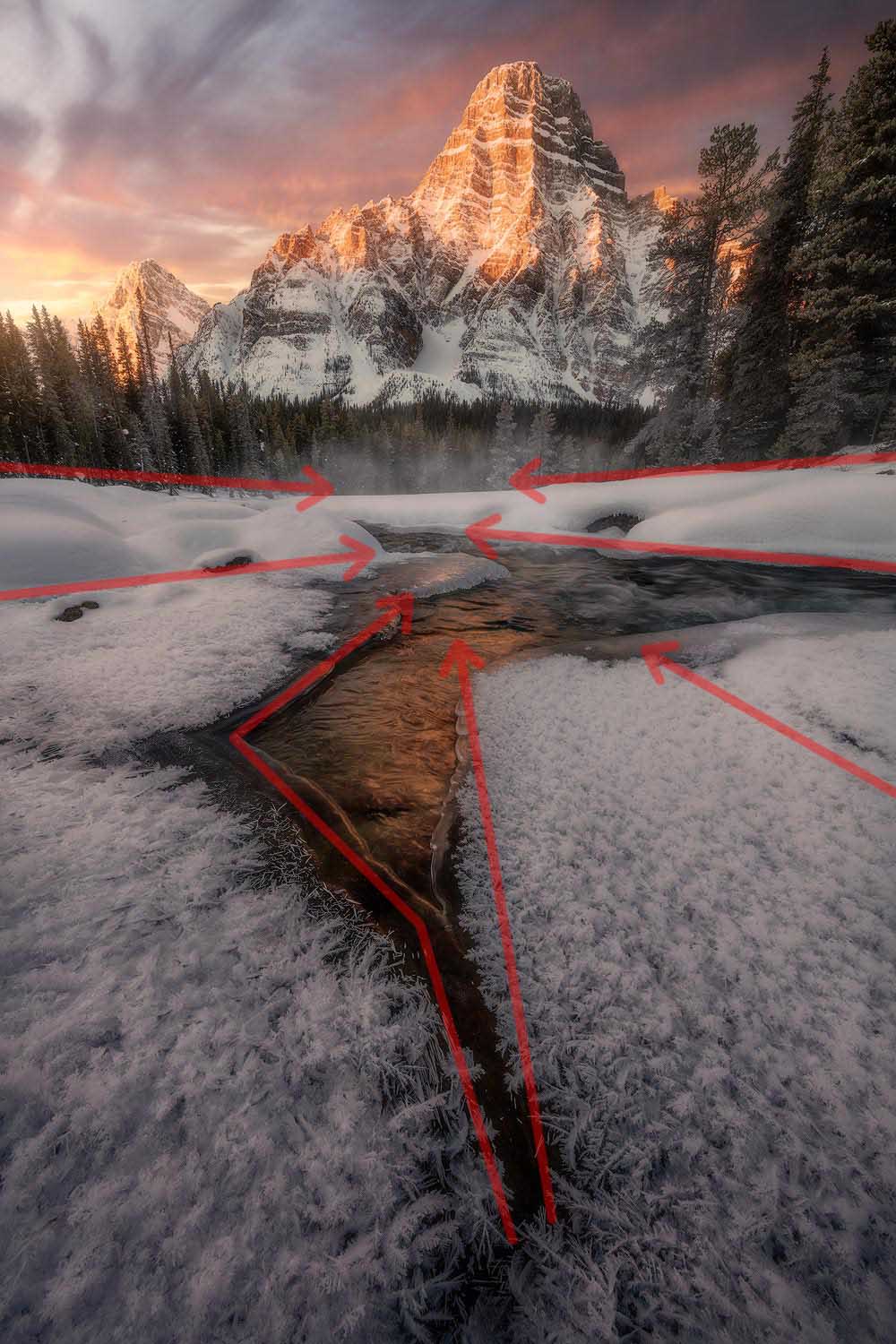
In this article, I will talk about one of the most important aspects of landscape photography: Finding and Using Great Leading Lines for our images. I will guide you through a few things I often look for when ever I compose my own images. I love strong leading lines in a composition because they will bring the viewers’s eyes deeper into the frame to your main subject.
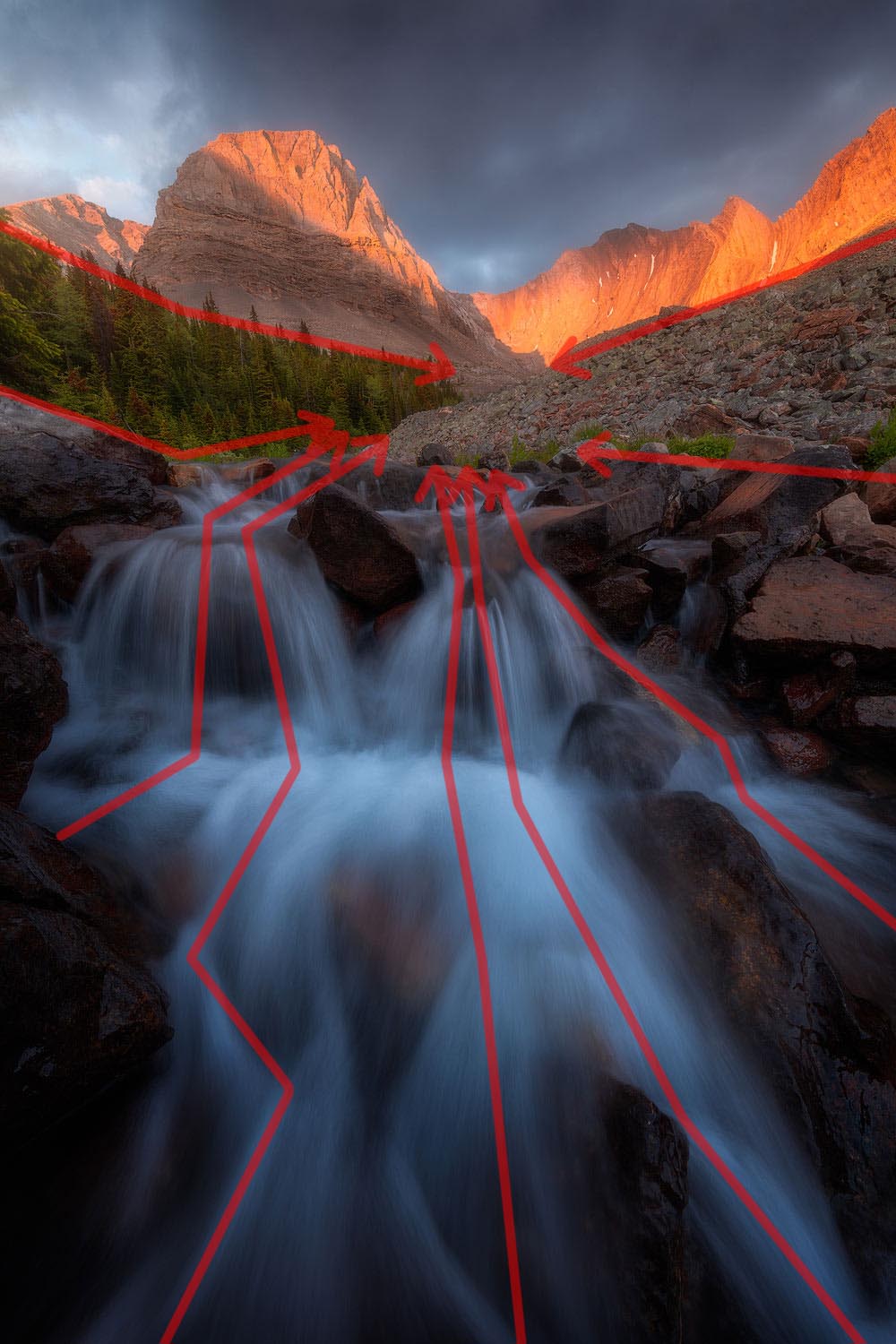
Keep in mind that for every example shown below, you can click on any image and they will open in a new browser window so you can enjoy the compositions without any red lines and arrows…
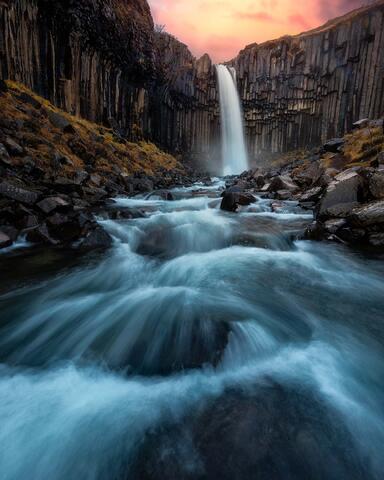
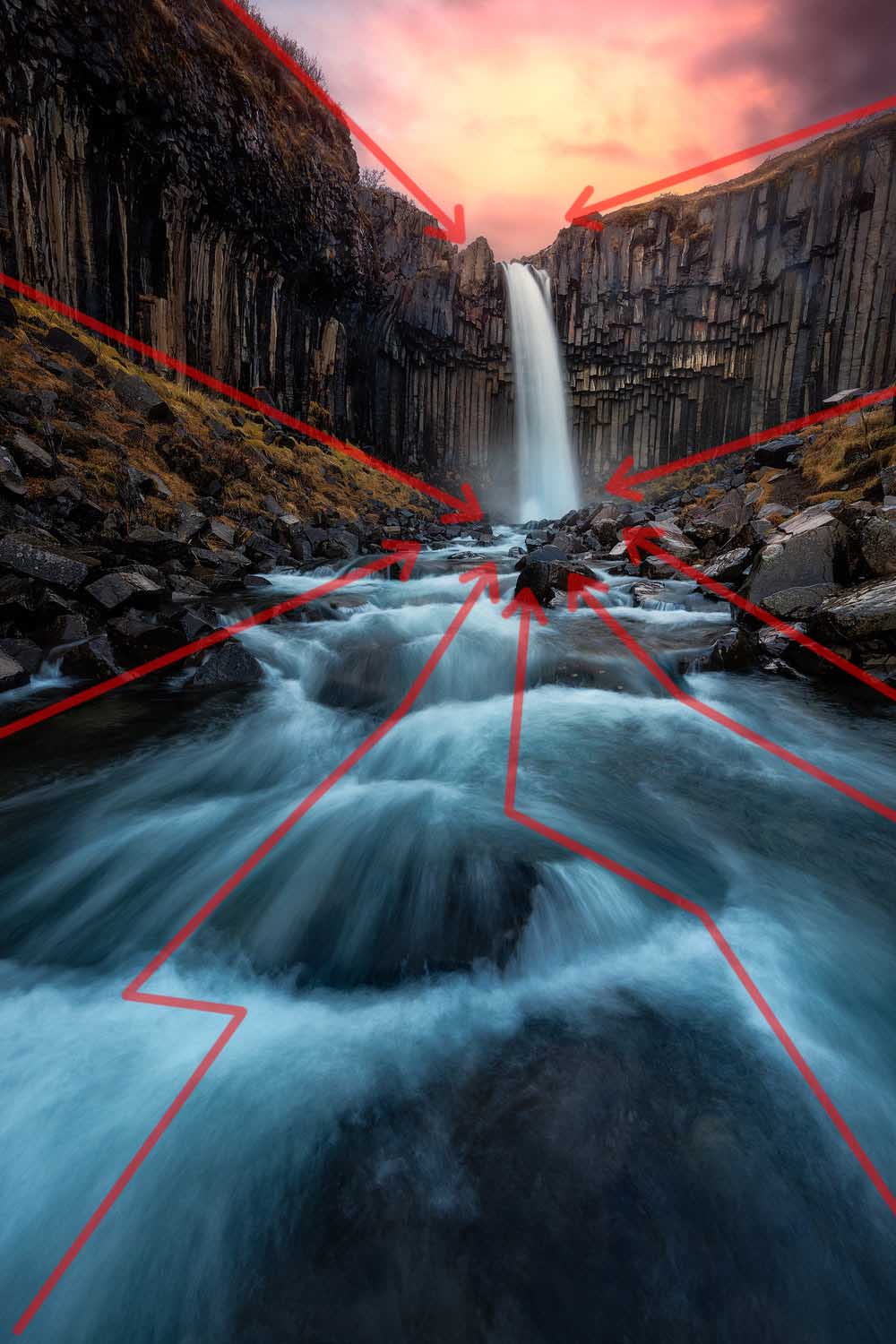
USING WATER FLOW AS LEADING LINES
Using water flow to create strong leading lines is always going to be highly interesting. Of course this will, in most situations, require the use of a Neutral Density Filter in order to be able to use a longer shutter speed. I highly recommend you try different shutter speeds to see what each camera setting will bring to your composition. I personally love to use shutter speeds around half a second as they allow me to retain a great amount of detail from moving water. Too long of a shutter speed will, in my opinion, kill all the details. Don’t get me wrong, there is no good or bad answer here…do what you prefer and what works best for you.
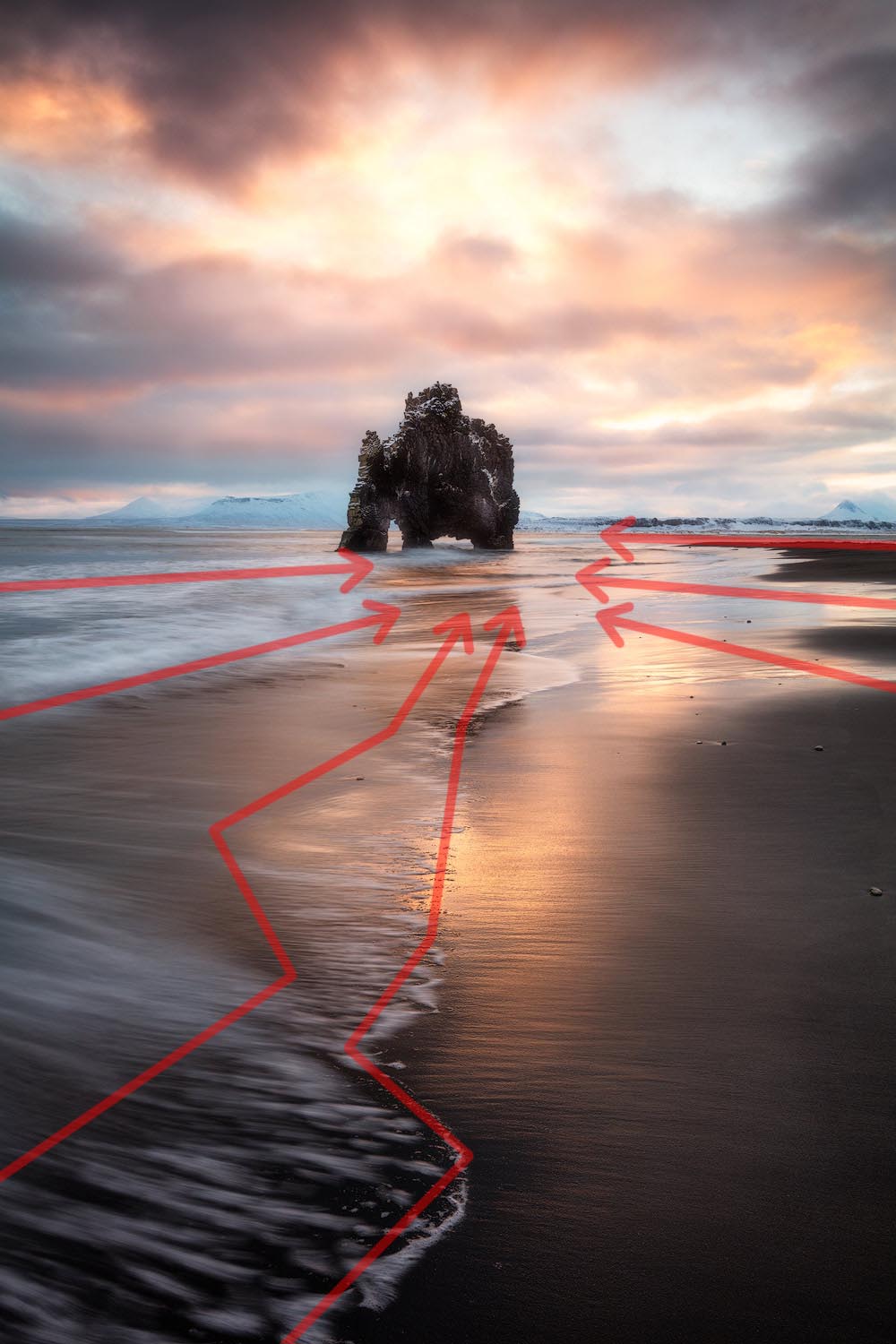
HAVING FUN AT THE BEACH?
Photographing seascapes is a lot of fun! It requires some patience, timing and pretty good waterproof boots! I personally love to use waders when I photograph near a body of water or near the ocean. This gives me the freedom and the comfort to work at a slow pace without worrying about getting my feet wet.
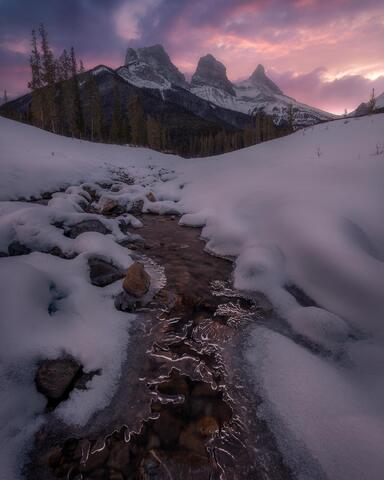
NARROW RIVERS FOR THE WIN
You should always consider using a creek or a narrow river to create a great lead in your composition. And since I love to photograph with an ultra wide angle lens, narrower is almost always going to be better. Not only will a narrow river be more likely to be shallow, it will make it easier for you to stand in without risking getting too wet or damaging your equipment. Once again, I love to use waders to be able to comfortably settle my camera and stay there for as long as I possibly need to to get my shot.

ICE CRACKS AS LEADING LINES
Using ice cracks to create strong leading lines is an absolute favorite of mine! As most of you already know, winter is a favorite season of mine! I love winter because it’s basically the only season when I don’t sweat like a pig! But it’s also my favorite season because I love texture! Ice and snow both will be rich in details and texture. Most lakes will freeze during the colder months of the year and ice will eventually break and create some lovely cracks. Using this cracks as leading lines will create a great impact and bring your viewers’ eyes to your main subject. Now one thing you must keep in mind is to ensure the ice is thick enough to support your weight before you step on it. It is recommended that the ice be at least 15cm thick for a human to safely walk on.

RECYCLING SOME WOOD FOR YOUR FOREGROUND
Some locations might look a little bit chaotic but trust me, if you look for the right kind of elements for your foreground, you could also end up creating some uniquely strong leading lines. I particularly love to use a dead tree or two in my foreground. Not only can they point so nicely to your subject, they also have amazing texture which you can use well to enhance in post production. Just be aware that dead trees can also contain some parasites and fungus which could be bad for our health.
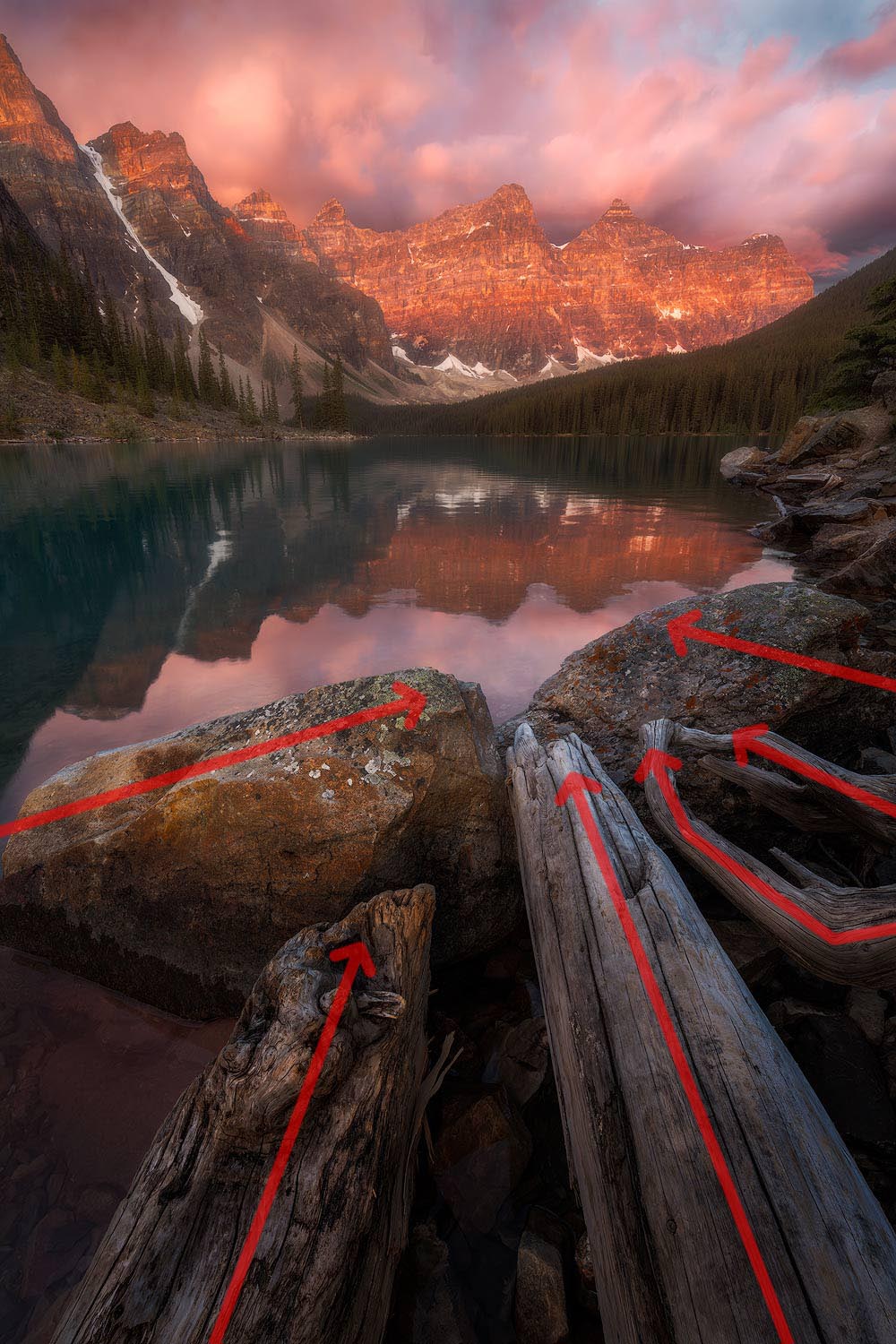
LEADING LINES SOLID AS A ROCK
Rocks are always going to create some great foreground interests. Not only do they come in the most diverse amount of shapes, they can also offer some really lovely textures. I learned the hard way that some rocks can be extremely slippery when wet…so make sure to be cautious when the ground is wet.

…IN CONCLUSION
In conclusion, this only touches the tip of the iceberg but hopefully will be enough to not only inspire you to find great leading lines for your landscape images but also help you to improve the final outcome of your art! If you’d like to learn a few more tips about how I compose my landscape images, consider reading my article Finding Impactful Foregrounds also available on my blog. And if you’re wondering why I composed a specific image and would like to know more about my composition decisions, let me know and I’ll be happy to talk about it in a future blog article!