Intimate Photography: Less Is More
I am not going to lie, I love Mother Nature’s creations! I love to capture the most beautiful grand scenes I can find in each of my outdoor excursions. Those grand scenes are the ones that make my heart beat faster! I am a real sucker for foggy atmosphere, dramatic winter light, those huge mountain peaks surrounded by emerald blue lakes…but I also love to look for small details from these huge scenes and turn them into an extrodinary image! The challenge is real though…these details just won’t pop up in your viewfinder! You truly have to look for them!

PRACTICE MAKES PERFECT
I can compare intimate photography to playing golf…on your very first game, it is very unlikely that you will hit a birdie! In fact, you might even stop counting how many times you missed that damn little white ball! And in my very short amateur golf player career, I am not even sure I ever actually hit a birdie. Maybe I am just not good at all at playing golf? One thing is for sure, I did improve my game with practice but it took years…
Same applies to pretty much everything we do in life: Practice Makes Perfect! And this is no less true when it comes to intimate photography. We will be required to train our eye to find small details or arrangement of lines. The best and only way to improve your intimate photography game is to practice! Would you like to give it a try? YES! Good! That’s the answer I wanted to hear! Take one hour every couple days, go out to your local park with only one camera body and one lens and give it a try! Don’t overdo it…one hour maximum! Make it to be a game! You want it to be fun!

INCLUDE VERY FEW ELEMENTS
To make intimate photography work, I tend to include as few elements as possible. In a forest scene which often tends to be overfilled with an abundance of details, try to isolate only one tree!
The quality of the light will have a significant impact as well…try a foggy day! Try a day during which you would have very little inspiration for your typical grand scene landscape images! Flat light seems to work better as it makes contrast visually more pleasing and relaxing for the eyes as well. If you have moving water with lots of ripples in your small scene, try to use a Neutral Density filter to smoothen the water surface. Remember the name of this Blog Article; LESS IS MORE!
LINES OF THIRD
Time to go back to our photography roots…let’s talk about the basic rules of composition; When I do intimate photography, I tend to enjoy positioning an element or my main subject on a line of third. The junction of two lines of third could also be a very strong location where you can position your main subject in your frame.
Keep in mind that we always read an image in a similar way that we read a text. We generally will start reading from one corner to the opposite one. For most of us, that means reading from the top left corner to the lower right one…there are indeed exceptions but in general, using these very simple rules of composition will often result in stronger images.

ONE CONTRASTING ELEMENT
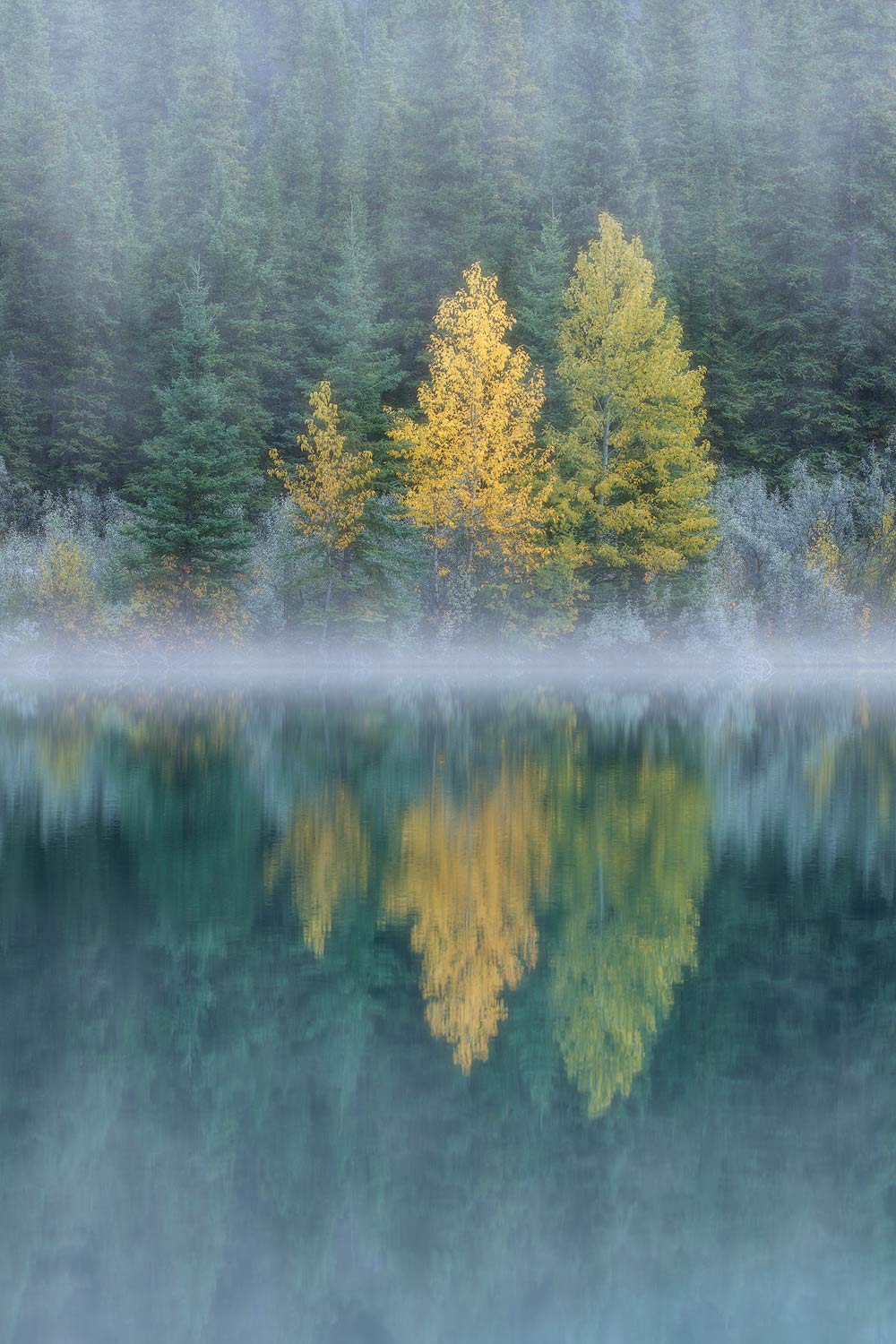
It is always fun to find contrast in nature. During the summer season, everything tends to be so green and somehow lacking a bit of contrast. The Fall season is the moment of the year when some of the vegetation will change colour into some really vibrant yellows, oranges or reds…in the case of the image below, I spotted a couple of aspen trees among a sea of conifers which really stand out thanks to their very punchy and vibrant autumn season hues! If you ever come across such an arrangement of trees, consider giving intimate photography a try! In this particular scenario, I was also very fortunate to have a pristine reflection and some atmospheric delight to top it all off!

USE A LONGER FOCAL LENGTH
A lot of people keep asking me why do I always carry my Canon 100-400mm lens in my camera bag…the answer is fairly easy! In most situations, a longer focal length lens will often be the best choice for intimate photography. Focal range between 70mm and 400mm will work superbly well to isolate a certain part of a scene.
Mount Inglismaldie is one beautiful mountain located just a couple of kilometers away from the breathtaking town of Banff. Most visitors will enjoy it’s splendor and will bring home pictures of Lake Minnewanka and Mount Inglismaldie together which is perfectly fine…on that particular day, the atmosphere and the side light were both playing a huge role at highlighting some amazing details of the mountain so I took my beloved 100-400mm lens out of my camera bag, mounted it to my camera body and captured a few intimate images of Inglismaldie which turned out absolutely amazing! Then again, these details would be almost invisible to most people…the best way to find such compositions is simply to hand hold your camera and screen many parts of the mountain until you can find a portion that is worthy of a click!

THE POWER OF REPETITIVE ELEMENTS
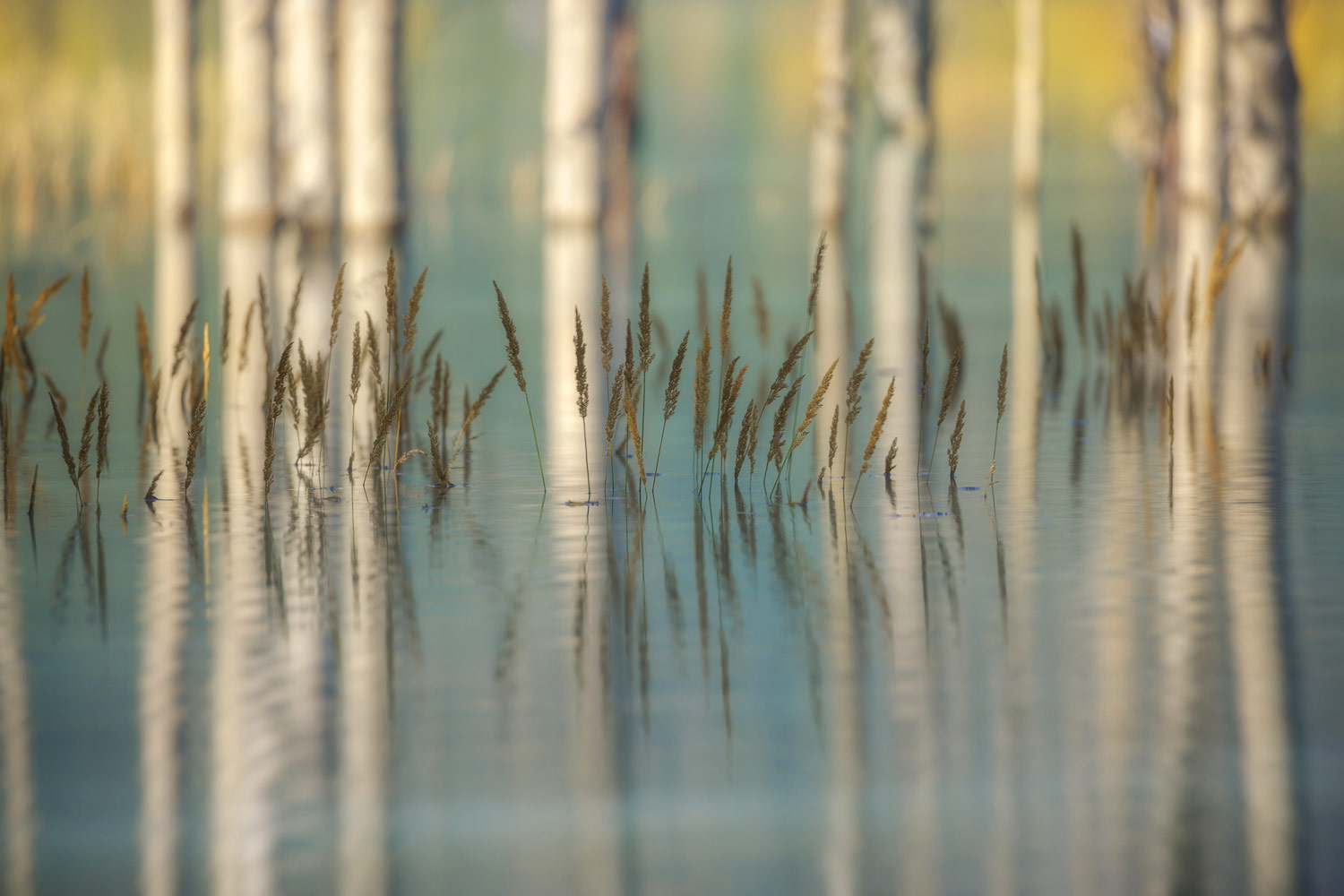
Pattern Photography utilizes elements that are repeated. The power of repetitive elements such as lines, shapes, tones, or colours will create interesting images. Some will use the pattern as the main subject while others will use it to enhance the overall composition and look of the photograph. In the case of lines, whether they are horizontal, vertical or diagonal, you should definitely use them to your advantage.
Try using one element that is continuously repeated throughout the image…each element could be in the same focal plane as the image shown above or you could simply have one in focus in the foreground and a few additional ones completely out of focus in the background. The second option will create great depth in the image. Either way, repetitive elements in any form of photography is surely going to be a winning recipe!
POINT YOUR CAMERA AT THE GROUND
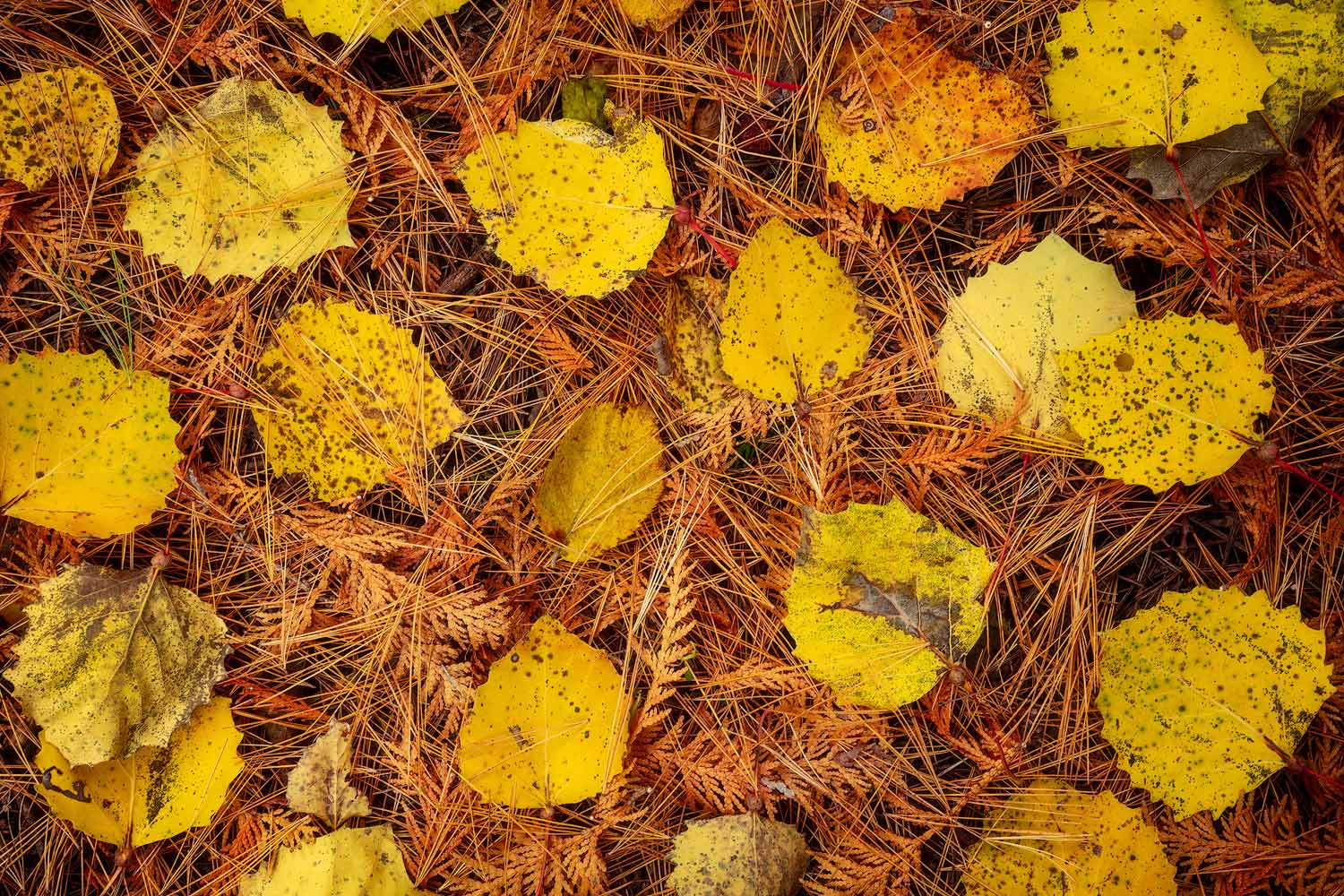
Often underrated, the ground on which you walk might hide thousands of really amazing compositions. Falling tree leaves are so fun to photograph when they are falling from the trees, that is true! But they are also fun to photograph when they are just laying down on the ground with other detailed elements such as pine needles, small rocks, forest litter and pretty much anything you could potentially find on the ground…and I have to admit that this is one place where I will become a bit creative and position some leaves myself.
SHALLOW DEPTH OF FIELD
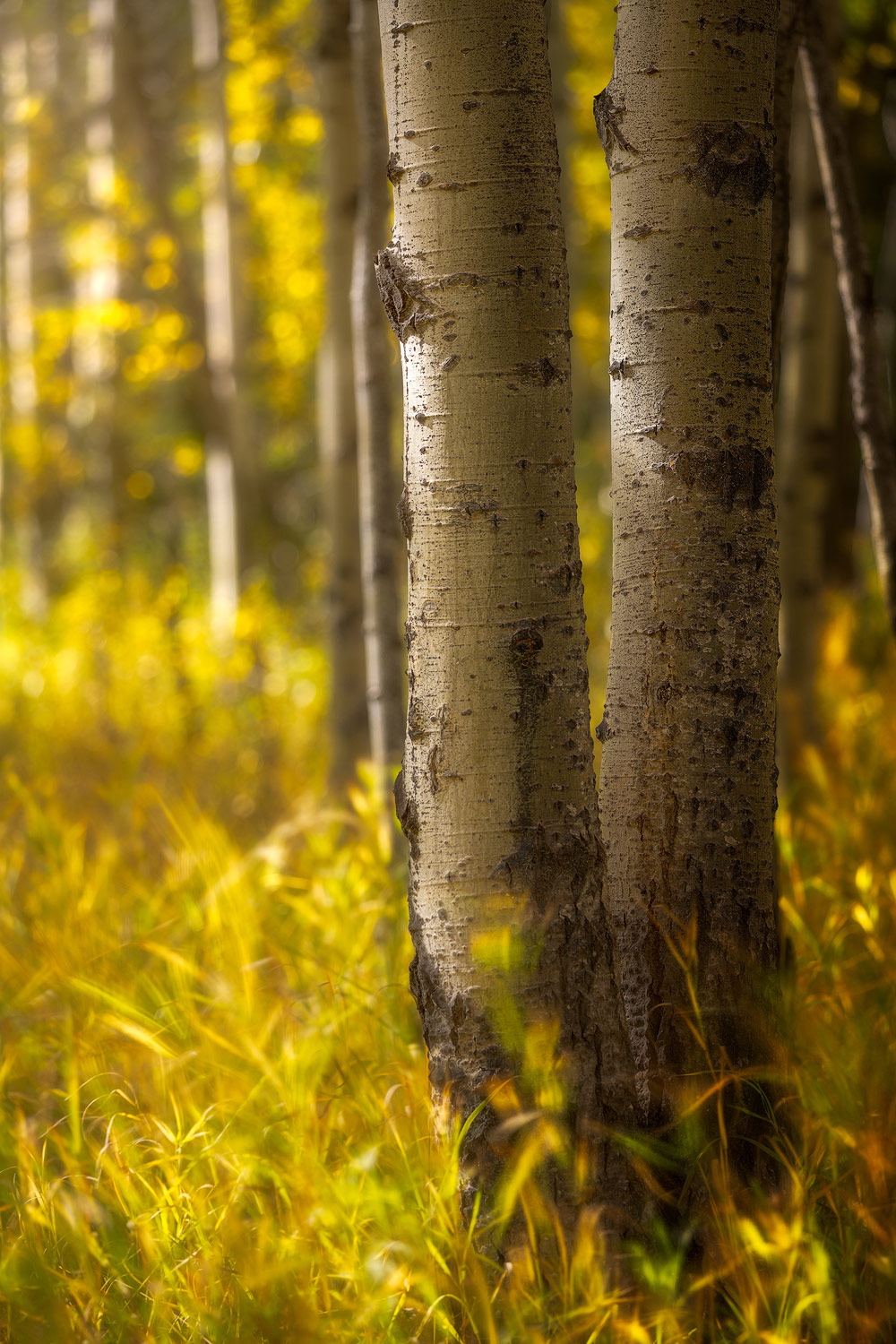
Use a shallow depth of field, open your aperture to it’s widest setting! Now this will go against everything I always teach and do as a landscape photographer…I love my images to be pin sharp from one corner to the opposed one. I always do techniques likes focus stacking in order to ensure that every single detail will be sharp but for intimate photography, I’d recommend going the exact opposite way and use a very wide aperture. You may ask why? This will ensure that you can create separation between the elements of your compositions. Being able to detach the main subject from the rest of the scene. This will not only make a very dreamy and blurry background, this will also make your subject pop and be the main star of the show! Intimate Photography and forest photography combined together can result in extremely messy outcomes…a wide aperture should always be an option to separate your subject and simplify the final image.
…IN CONCLUSION
In conclusion, there is no secret recipe for intimate photography…all it takes is practice! Practice, practice and more practice! I am just coming back from a trip to the Canadian Rockies, a trip in which I was co-leading my annual fall season workshop and we had a real blast! We had beautiful light through out the workshop and during our free time, I introduced my student photographers to intimate photography and some of them didn’t really appreciate. I helped them find multiple compositions in order to help them develop their eye for such images but it takes time! Not that long ago, I was also struggling to find intimate images that would please my eyes but with time and practice, I was eventually able to figure out what to look for and now I am happy with the images I can produce! All images of this blog article were in fact created during that workshop week…and I have many more to edit!