Which Lens is the Best for Landscape Photography?
I often receive messages or emails asking me: Which lens is the best for landscape photography? I could answer this by saying I mostly use a Canon EF11-24mm f4 and voilà! You have your answer! But I won’t do that! I love the equipment I use but it doesn’t mean it is what you absolutely need and it might not fit your needs and style.
Even though that is a very personal topic and what I mean by this is we don’t all have the same goals for our photography but in this article, I will share many thoughts that will help you to choose the right lens for your landscape photography adventures.
Since I use ultra-wide angle lenses for most of my landscape images, I will mostly be talking about the PROS and CONS for these lenses in the article. But keep in mind that the same could apply to regular lenses too.

WHAT DO YOU MOSTLY PHOTOGRAPH?
Some people tend to prefer prime lenses (fixed focal length lenses) because these lenses will normally be sharper and will also have better contrast, and it makes a lot of sense since prime lenses are optically much simpler. If light has to go through fewer glass elements, it only makes sense that images coming out of them will be sharper!

But for a landscape photographer, prime lenses just don’t work that well since they limit us to a specific focal length. For that same reason, I always use zoom lenses. I will sacrifice a little bit of sharpness for something that will be much more versatile. But does the perfect ultra wide angle lens for landscape photography even exist? Short answer: NO! It would be amazing to have a 12-35mm f2.8 which I would consider to have both a really wide aperture and a great focal length range but such a lens would be so heavy and astronomically expensive. We have to make some compromises…I am really enjoying one lens in particular right now, the Canon RF15-35mm f2.8. I truly wish it was a little wider than 15mm but at least, it has a wide constant aperture of f2.8 while still having and interesting focal length range. It’s also pretty light and compact compared to other wider options.
When buying a lens, you have to ask yourself what do you prefer to photograph? Daytime images only? Maybe you don’t need a constant maximum aperture of f2.8? In that case, a lens with a maximum aperture of f4.0 could be ideal for you. Is astro photography something you love or plan on doing sooner than later? Then consider a lens that can open to f2.8 or even wider. It gets really dark at night and a lens with a maximum aperture of f2.8 will allow more light come in which will at the same time also allow you to use lower ISO. Lower ISO means less noise…anyway, you know the deal!

BUY QUALITY OPTICS!
Now this is probably the most important aspect of buying an expensive piece of glass: Is it sharp? Does it have good optical qualities? There are a lot of reliable sources and sites that test lenses on internet. But I like to do things myself…I like to test lenses because I am a little bit of a nerd when it comes to camera equipment. I bought a lens test chart on Amazon a couple of years ago and testing lenses myself to see how good or bad they are is truly fun! That test chart must be of very good quality though. If you want to buy one, make sure to purchase a high resolution one from a trusted source. They aren’t very expensive…but are worth every penny since they can tell you the whole truth about your equipment.
Using a lens chart is pretty easy. You must stick it to a wall, mount the camera and lens combo on a sturdy tripod, sensor must be perfectly parallel to the chart and then you capture images at every aperture and every focal length possible for that lens. That is a very interesting test to do because it will not only tell you if your lens is good, you will also get to know which aperture is best for each lense. That’s what we like to call the lens’ sweet spot! Some lenses can also be prone to have Chromatic Aberration or Colour Fringing problems which both can be corrected in post production but it would still be interesting to know if a lens has any of these optical flaws.

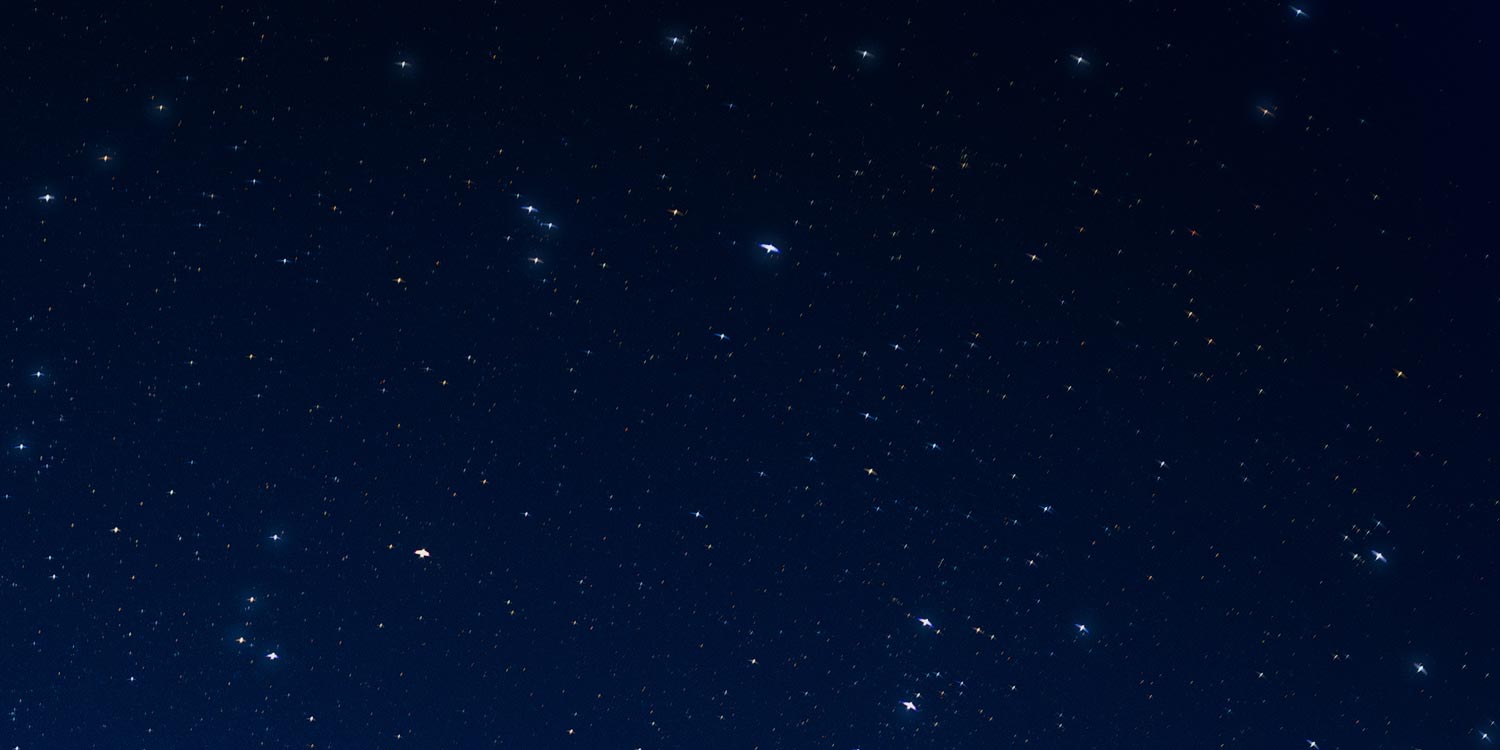
Earlier in this article, I briefly talked about astro photography…here’s a lens flaw that can be a serious let down when photographing stars: Coma. No I am not talking about medical issues here. Coma can also be a type of lens aberration that cannot be corrected in Photoshop. The non scientific way to easily explain that phenomena would be that at a very wide aperture, light that enters the lens will bounce and reflect weirdly in such a way that stars located in the corners of your image will not only appear weirdly elongated, they will also have a very bizarre curved cross shape. This isn’t very elegant to be honest! Some lenses are very good and others are very bad with Coma. Some lenses don’t have any Coma! The only way to know is to test the lens in a real world situation. Go outside under a beautiful starry sky and capture some images using your lens’ widest aperture first and then close the aperture one stop at a time. Normally one stop down from maximum aperture should be much better. But some lenses can be really bad two or three stops down…you want to avoid these lenses for astro photography.
PROPER WEATHER SEALING IS IMPORTANT
The nature of landscape photography means to capture images outside, right? The clear blue sky days aren’t going to be my preferred moments to capture images…I truly love moody light and some serious atmosphere! Wether it is raining, snowing, windy, foggy, humid, extremely cold or even all of them together, a lens’ weather sealing properties will need be of the highest importance. There is nothing more annoying than a lens that fogs on you as soon as the weather gets spicy…ask me how that feels! GRRR!!
A couple of years ago, I bought a Sigma Art 20mm f1.4 lens because it was cheaper than the Canon version…and boy did I regret it! Optically speaking, it was an ok lens. It was pretty sharp and I thought I got a good deal! But as soon as I started using it outside in the cold weather, it fogged on me. Every single time the weather was a couple of degrees below the freezing point, it would form a nice condensation spot inside the front element and would become unusable until the condensation was gone. Of course, warranty wouldn’t cover it and the issue showed up after the date I was still permitted to return the lens…I sold it to someone that only does studio work and lost a lot of money. My experience with aftermarket lenses is that weather sealing doesn’t seem to be as good as premium quality lenses from your preferred camera manufacturer.

WHAT KIND OF FILTERS CAN I USE ON IT?
The Kind of Optical Filters I can use on the lens is a very important point to consider for any landscape photographer. Due to their nature of ultra-wide angle lenses being able to capture an extremely wide field of view, some of them will have a very bulbous front element. That makes mounting optical filters on it to be much more complicated. A Canon lens that I use very often is the Canon 11-24mm f4.0. I truly love that lens because of it’s focal length range and it’s optical qualities. Mounting filters on it on the other hand is very annoying because you need a special adapter and extremely wide filters otherwise you will have vignetting problems.
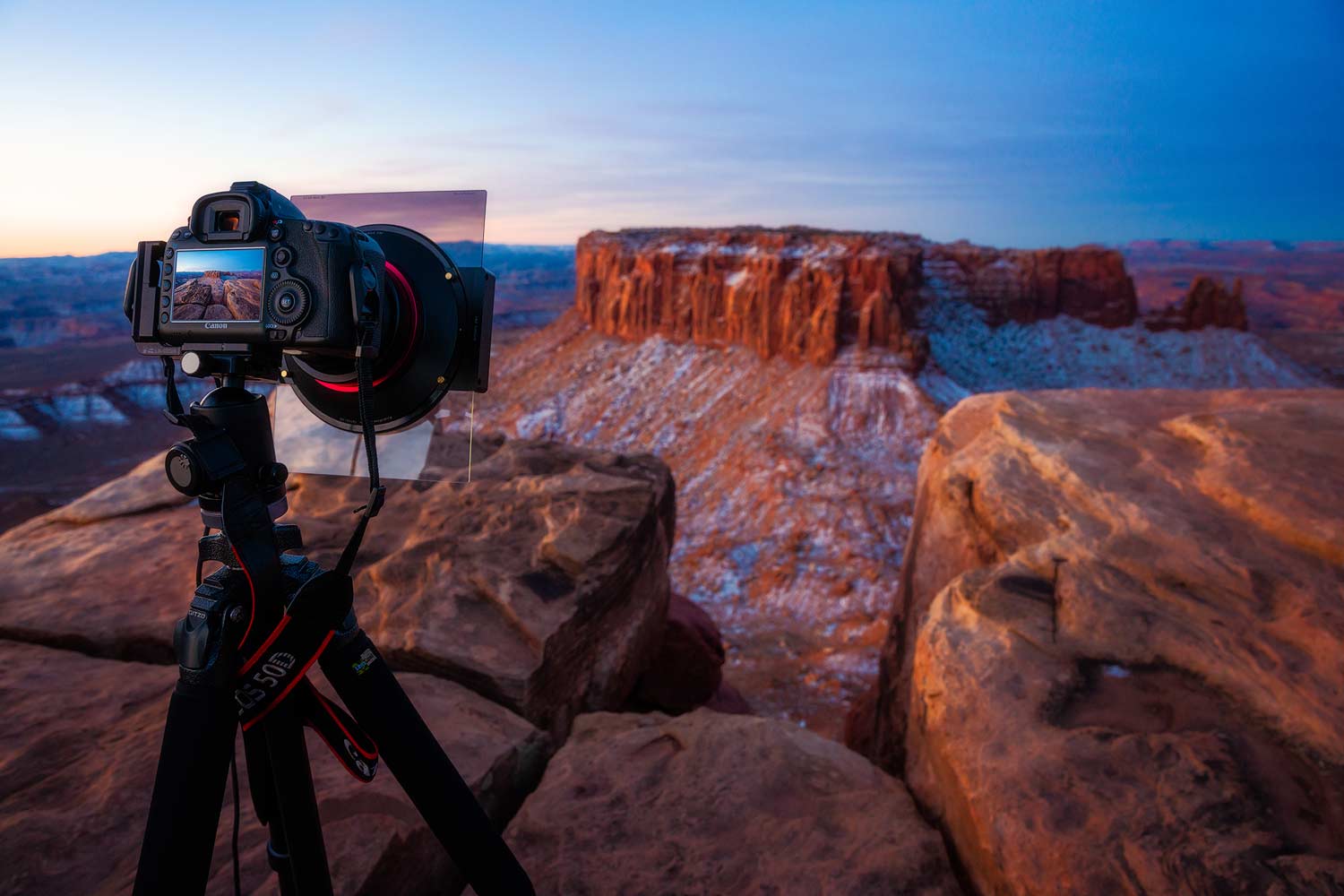
There are other available options for most lenses with bulbous front elements though. Some optical filter companies designed drop-in filters that can be mounted between the lens and the camera body. The problem I often see with these is that you will end up exposing your sensor to the elements every time you will want to install, swap or remove a filter. And every time we expose the sensor to the elements could be resulting in dust lodging on the sensor and dust spots on the images. See what KASE FILTERS makes for my Canon EF11-24mm lens here!

RENT A LENS AND TEST IT!
Since most quality lenses are expensive, buying one without knowing if it performs well doesn’t make sense. Testing a lens in a camera store is far from being ideal since you basically can’t test anything really and you’ll need to pump the ISO way up. Lenses need to be carefully tested in a real life type of scenario. This is where spending a hundred dollars to rent a lens for a weekend makes the most sense. That way, you can test it without having to spend to much. My camera store did this for me a couple times…ask them if you could rent the lens, pay for the rental fees and if you end up buying the lens, then they could refund the renting fees! This of course depends if you have a good relationship with your local camera store but I’ve done this a couple of times! Buying from an on-line store wouldn’t allow you such an option by the way…you should always try to support your local camera store!
TOO EXPENSIVE FOR MY BUDGET!
If there is one thing I often told myself in the last 15 years: That lens is way too expensive for my budget! And instead of being patient, I went ahead and bought a cheaper lens instead! Every single time, it ended up being a very bad decision! My best advice if you don’t have the money right now, wait until you have the required amount! Buying a lens for its price instead of its quality will always be a big disappointment. There is a reason why some cars are more expensive than others…there is a reason why a refrigerator is more expensive than another one…and I could seriously go for hours with examples like this! Same thing applies for lenses and camera equipment in general: Quality = More Expensive. That is a sad but true reality.
…IN CONCLUSION
In conclusion, we spend a lot of money just to be able to survive our daily routine! Food has become so expensive, petrol is on a constant ascent, car maintenance, mortgage, property taxes…only to name a few. But if I can help you to make the best decision when buying a lens with this article and guiding you through important points to consider, then my mission here will be accomplished!
I had issues with most of the points listed above…I made mistakes, I paid big dollars on lenses that ended up being useless, I lost money… And I don’t want you to make the same mistake I did! I sure hope this helps! Happy Shopping!
I also recently posted a Blog Article about what I actually use and What’s in my Camera Bag. It could very well compliment this article and guide you through more amazing purchases!