Most Frequently Asked Questions
For this article, I went in a slightly different direction…I decided to answer some of the most frequent questions that people often ask me. Don’t get me wrong, I don’t mind at all answering those questions when they are asked. As a matter of fact, I always love interacting with my audience. I also love to teach photography and explain theories about my passion and my art. But creating an article about this topic also helps you to know a little more about myself and my art! Here are 6 of the most asked questions in no particular order:
YOUR IMAGES ARE AMAZING…YOU MUST HAVE A GREAT CAMERA?
The real answer to that question is: for landscape photography, the camera you use doesn’t matter all that much! I personally use a Canon 5DSr…a 9 year old camera body with what most people consider to be a very poorly performing camera with a mediocre dynamic range. But guess what, I know how to use it and I create amazing images with it every single time I take it out of my camera bag! The moral of the story, the camera doesn’t create the images…the person behind it does! The camera’s features will make your job or your hobby as a photographer easier…if that makes sense? But the hands operating the tool are the ones making the biggest difference. The best camera in the worst photographer’s hands won’t be of much use…

WHICH LENS DO YOU USE MORE OFTEN?
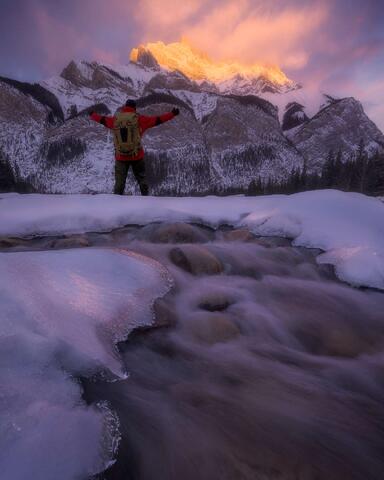
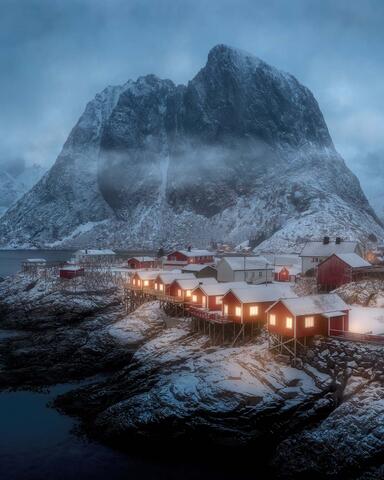
I would say that for 90% of my images, I use my Canon EF 11-24mm f4.0 which is an ultra wide angle lens. I rarely use 11mm…but I often capture images in the 12 to 24mm range. It just works so nicely with the style of images I love to create. Notice that most of my images are vertically oriented with very detailed and textured foregrounds with strong leading lines and a main central subject which often is a mountain since I spend most of my time in the mountains. I love to play with perspective and make both my foreground and main subject look more prominent thanks to the lens’ elongating effect. Lens compression makes it so that the background often looks very small…but if you place a mountain in the top part of the frame, the lens will elongate it in such a way that it looks taller.

DO YOU SHOOT RAW IMAGES?
Short answer: YES! Why wouldn’t I shoot RAW files? Why wouldn’t I want to capture images with the most possible amount of details and colour that my camera can give? Colour graduates will be much better if you capture images in RAW format. A JPEG file is 8 bit and a RAW file is 14 bit (or 16 bit in some rare applications…) Now to explain what that means is pretty simple…JPEG files will have much less colour variations than RAW files. Each colour channel will have 2 to the power of 8 different colours which means 256 and then you need to multiply 256 to the power of 3 which means a total of 16,777,216 different colours. That might sound like a lot to you but the numbers go exponentially higher when you do 2 to the power of 14 for each channel… RAW files: each channel will have 16384 different colours and then that same number to the power of 3….we now have many more colours than we can even see with our eyes! RAW files will give you a much wider editing power in Lightroom! There is much more to RAW files than just this but I don’t want to go into too much math here…what will you remember then? RAW = More Details! And we want more details…right?
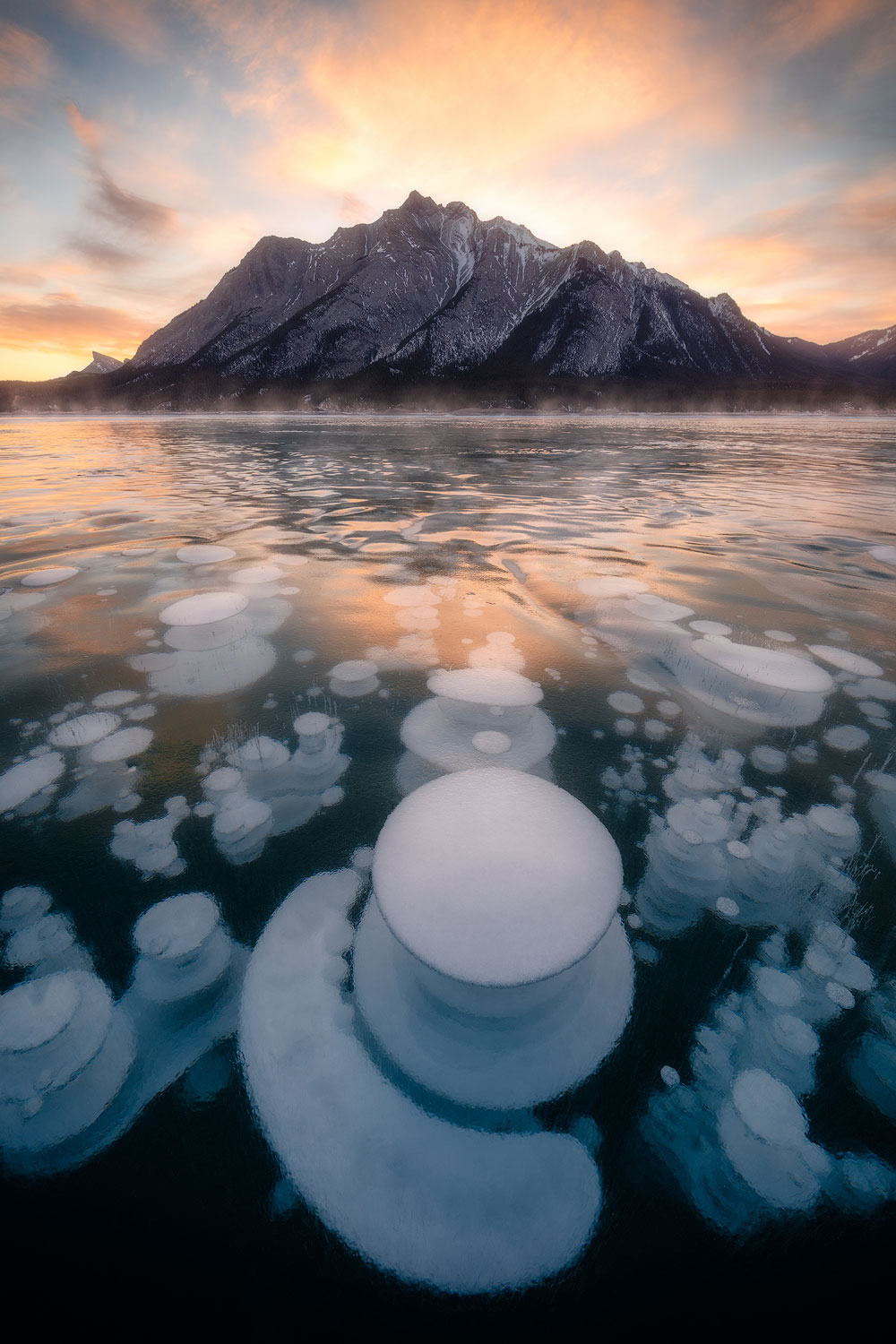
ARE YOUR IMAGES PHOTOSHOPPED?
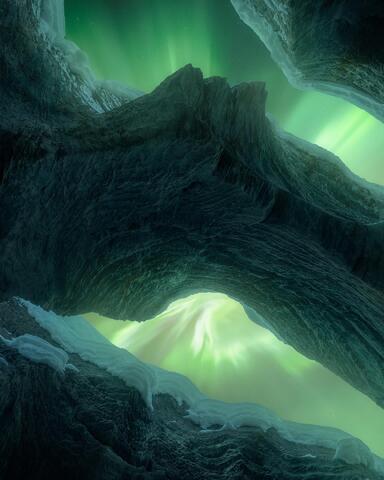
Seriously? Guys, we are in 2024…everything is Photoshopped! Your cell phone JPEG images on which you applied filters and tweaked the colours are considered Photoshopped! Your daughter’s Snap Chat portraits are Photoshopped! Even Ansel Adams used to Photoshop his images inside the dark room! He was doing a lot of Dodging and Burning on his images! Photo manipulation isn’t new to us and it has been done for as long as we have been able to capture images even on film cameras. Ok, photo manipulation back then was much more complicated…but was still very possible by those who knew how to be creative in the development process. Photography is art…and you are the captain of your own ship! You are free to navigate in any direction you desire as long as you are being transparent about it. I capture all my images in RAW format which means that there isn’t any sort of creative colour filters and/or contrast. The RAW files straight from any camera will always look extremely flat and will require a minimum of editing. I like to adjust colours and contrast using Lightroom and everything more complicated will be done in Photoshop. And yes, I will also go as far as compositing a different sky in some situations. It’s my art, I decide!
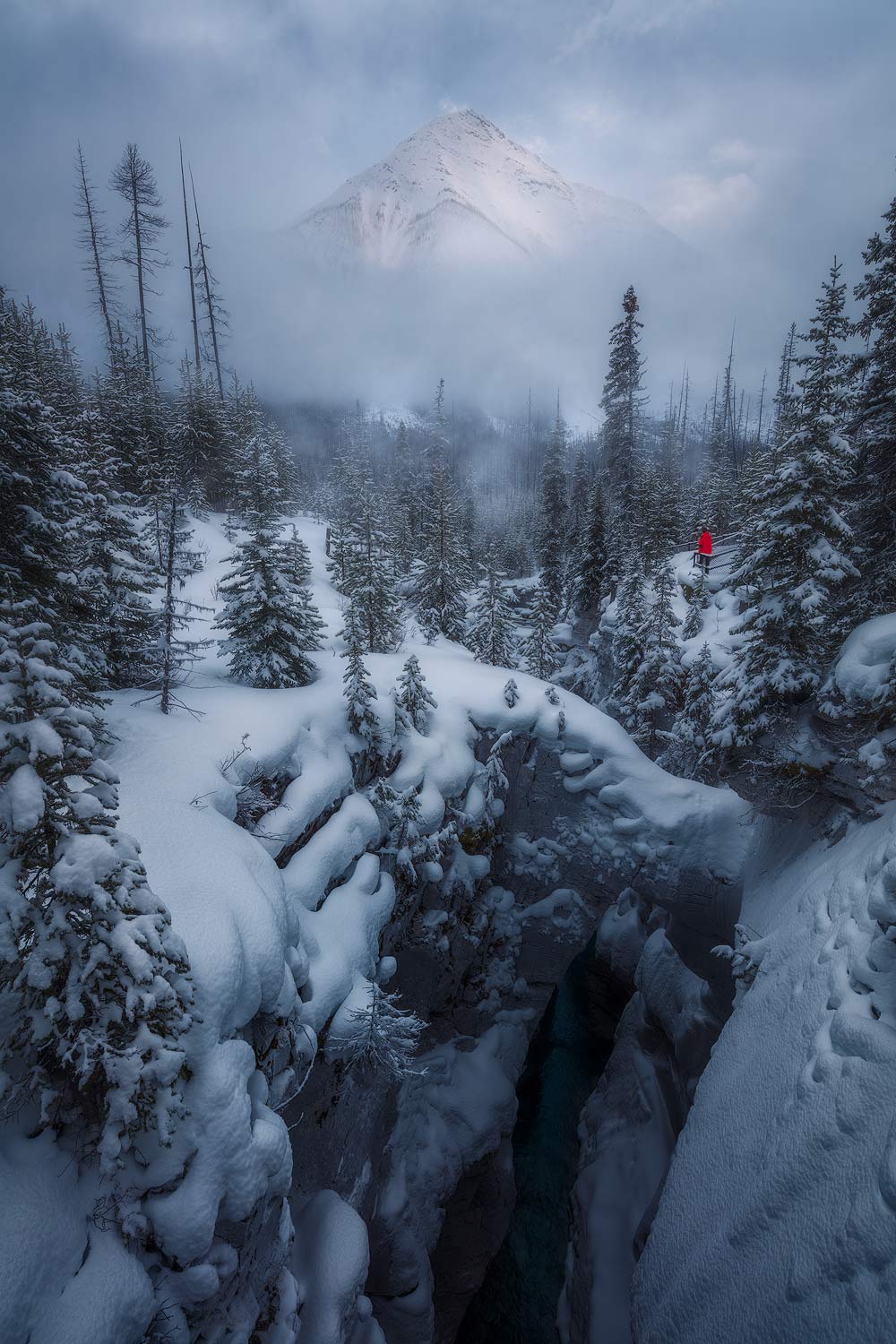
OPTICAL FILTERS AREN’T REPRESENTING WHAT WE SEE…WHY USE THEM?
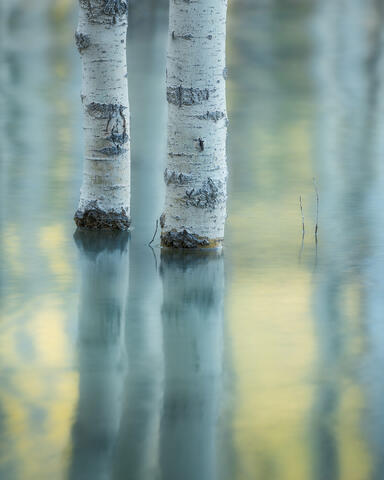
Some people seem to be reluctant about using optical filters because they don’t represent what our eyes are seeing. I’d say that’s their choice… I personally love to use a neutral density filter to smoothen the water surface and make it more pleasing to my eyes and my audience’s. Water can look very distractive if it has too much detail. A Neutral Density filter will serve a great purpose in creating a really nice visual flow on a water surface. I also love to use a circular polarizer filter to control the amount of reflection on reflecting surfaces…to have a beautiful reflection is always pleasant but sometimes, what is underneath the water can be even more spectacular. Controlling and unveiling some of those submerged details can truly add a lot to a composition! But then again, it’s all part of the creative process! There is no ideal formula…sometimes I prefer without a filter too. Some filters will add a strong colour cast to images…I personally don’t like to use these filters and I prefer to do my own colour editing in post processing. That’s me! That’s the way I do things! Learn more about the optical filters I use HERE!
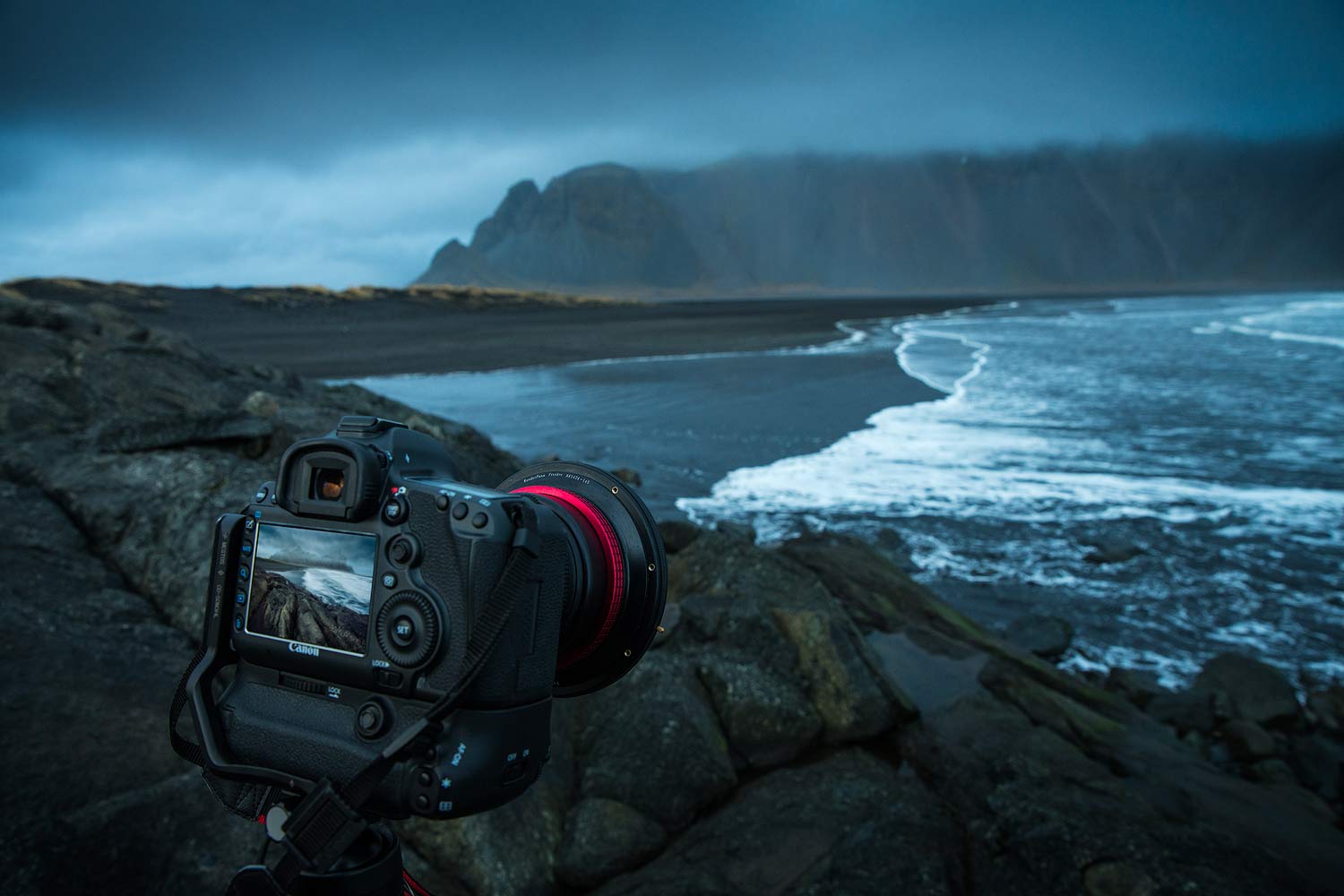
WHAT ARE THE BEST CAMERA SETTINGS?
Well that’s a tough one to answer…since each image is a case by case type of scenario. The important thing is to understand the relation between Shutter Speed, Aperture and ISO…and use them to your advantage to capture the image that pleases you the most! Here are a few things to remember:
-Shutter Speed; …will be important to master if you want to fully freeze your subject or give it some artistic movement. It’s all about the nature of your subject and your intention. Since most of my images are captured on a tripod, I use any shutter speed, even as slow as a couple of minutes…but if you like to capture images while hand holding your camera, you will need to consider a basic shutter speed rule: 50mm will require at least 1/50th of a second, 100mm will require at least 1/100th of a second and so on….
-Aperture; …will have a great impact on Depth of Field in your images. An aperture setting count of f2.8 will have a much narrower Depth of Field than f22 for example. But it doesn’t stop there…f22 will also generate diffraction which will greatly reduce image sharpness. I often use f11 since it represents my lenses’ sweet spot for sharpness. f11 won’t have as much Depth of Field as f 22…and for that reason, I will do Focus Stacking in situations where I can’t have the whole scene in focus. Read more about Focus Stacking HERE.
-ISO; …is kind of the last setting of the three and will be adjusted as low as possible when using a tripod. It represents the sensor’s sensitivity to light. Lower ISO number means less light than higher numbers. Higher ISOs will also generate more noise. And since I consider noise to be unacceptable in landscape photography, I use the ISO setting as low as possible. To be more specific, a setting of ISO 100 for the most part…but I don’t mind using ISO 200 or 400 if I need a little faster shutter speed.

…IN CONLUSION
In conclusion, there are many other questions that I’m often asked but I could only cover so many here in a single Blog Article. Let me know if you enjoyed reading this article and please, if you have questions that you would like me to answer in my next similar Blog Article, just send me an email! And I will be very happy to talk to you and secondly include that question next time!
If you like similar Blog content, I also have Blog Articles about Camera Hacks and Field Tips part ONE and TWO that could be really educative and potentially help you at some point in the field!